Why clay is tricky
Clay drains slowly, so water sits after rain. It compacts easily under foot traffic and machines. It swells when wet, shrinks and cracks in a dry summer, and heaves with frost in winter.
Get the grade right first
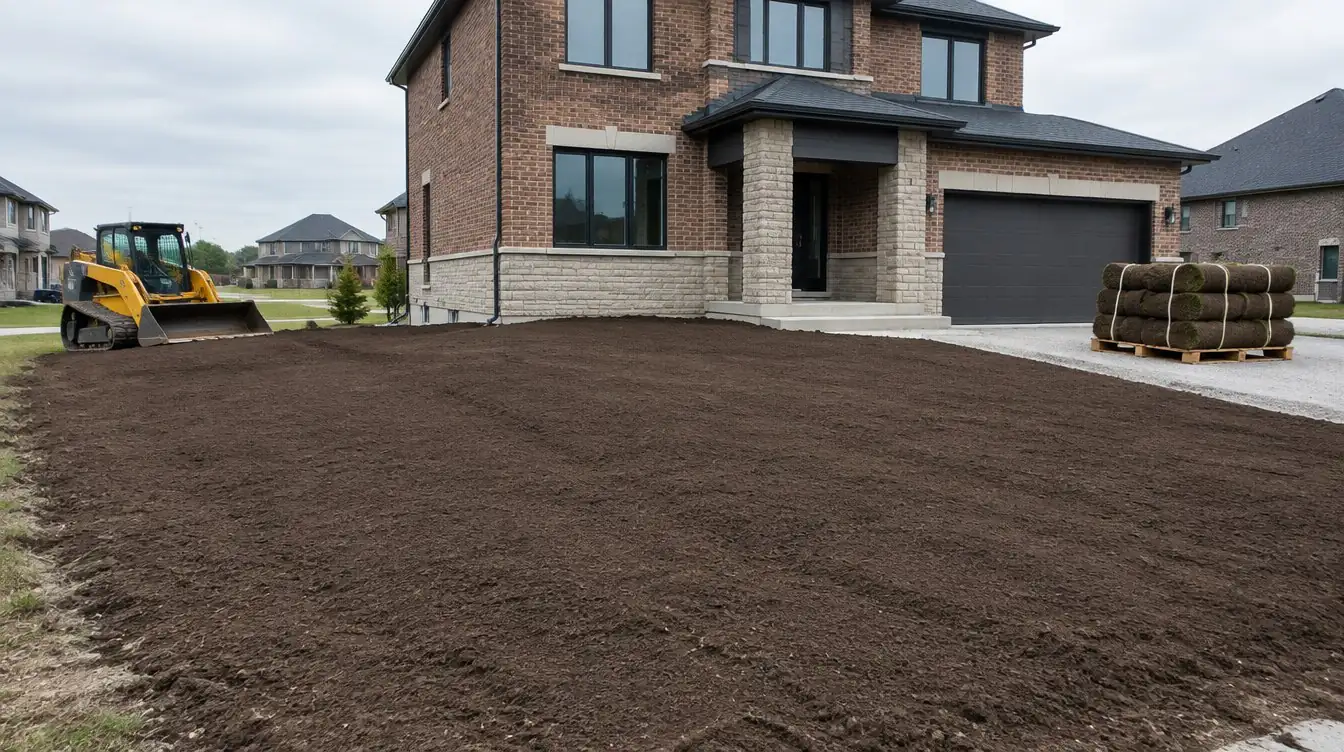
On a flat Windsor lot with clay underneath, water has to be sent somewhere. The ground should slope away from the house so rain runs off instead of soaking in by the foundation. Grading comes before any lawn, bed or patio.
Lawns on clay
Sod does well on clay with the right prep: the old lawn out, the ground levelled and sloped, and a layer of good topsoil on top where the existing soil is poor. Then water deeply and less often once the sod has rooted, so the roots grow down.
Garden beds on clay
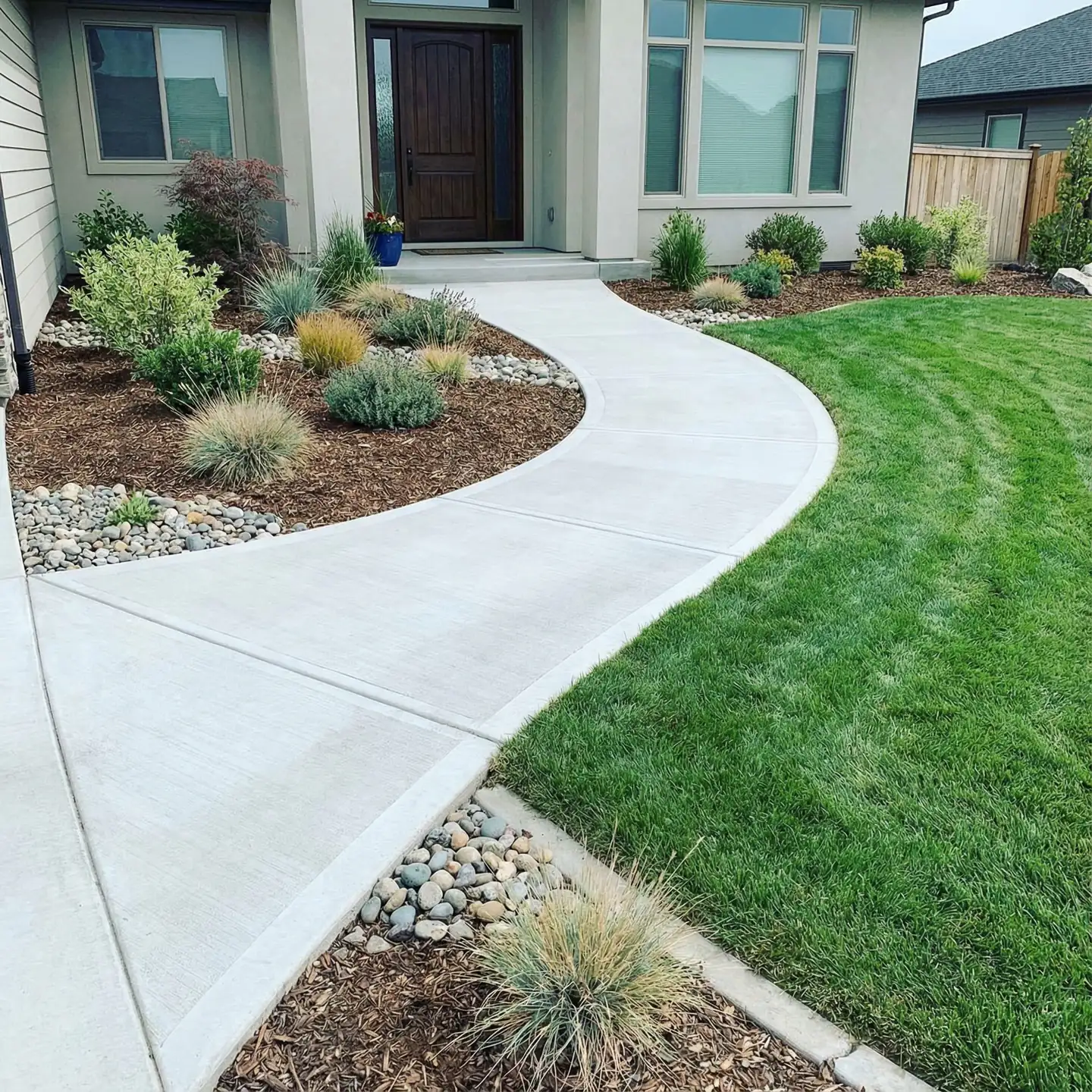
Plants struggle in heavy, waterlogged clay. Bringing in fresh soil, and raising beds slightly above the lawn, gives the roots something to grow in and helps water drain away.
Turf, patios and driveways
Anything hard or synthetic needs a compacted granular base between it and the clay. That base spreads the load, lets water move and keeps the surface flat through freeze and thaw.
Don't work it wet
Digging or rolling clay while it's soaked turns it into a dense, airless layer. Clay is best worked when it's moist but crumbly, not sticky.
When water still won't leave
Grading moves surface water away from the house. If water is coming in through the foundation or up through the basement floor, that's a job for a waterproofing contractor.
Working with clay in your yard?
Free on-site estimate anywhere in Windsor-Essex, with a written quote the same day. Call or text 519-567-4724.